

Incorporating Scientific Uncertainty into Undergraduate STEM Education Classes
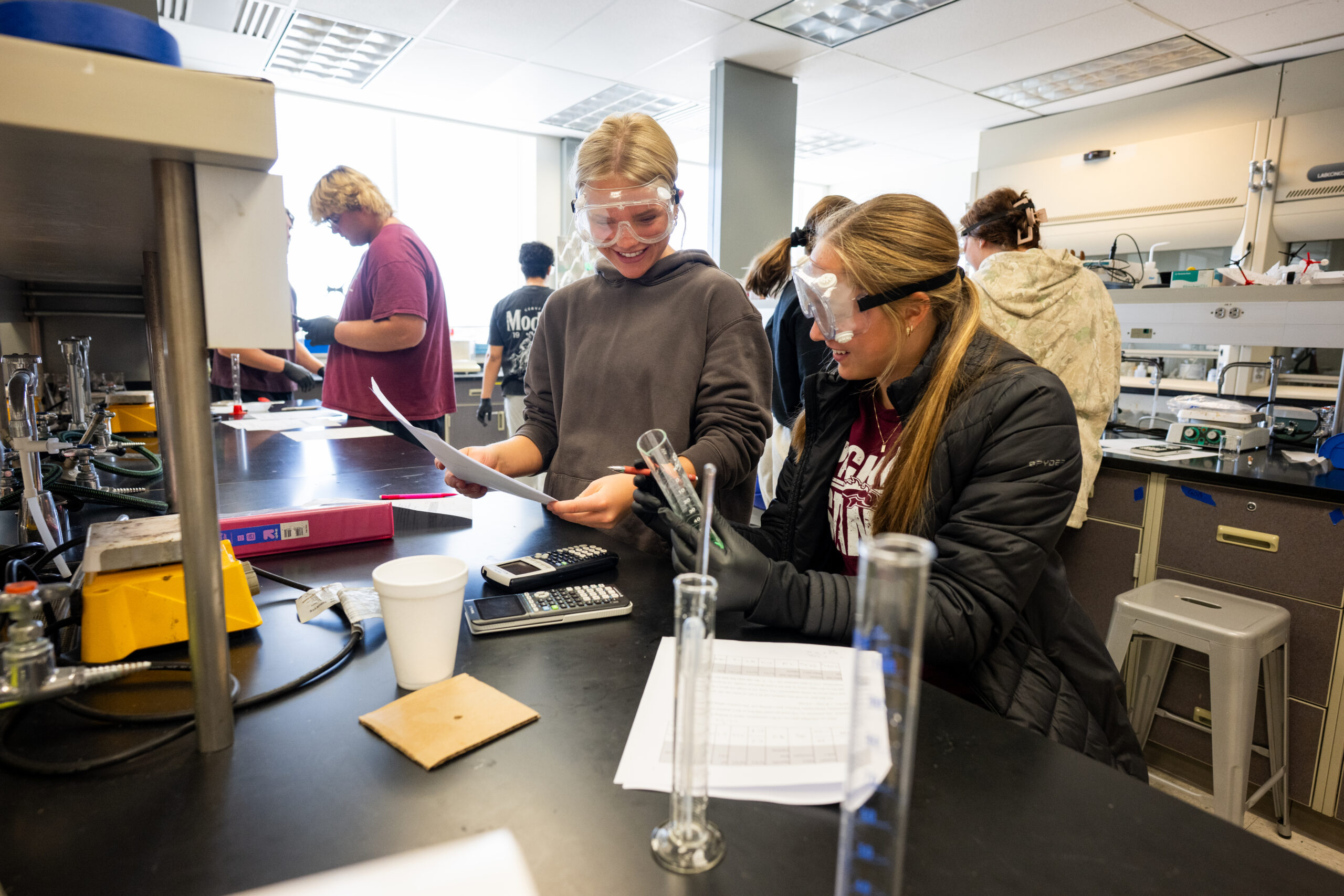
Over the past several years, a team of researchers here at Morningside University conducted a study to see whether and how the incorporation of intentional education about scientific uncertainty into introductory STEM education courses would have a meaningful impact on students’ scientific literacy and perception of scientific uncertainty.
This website provides other people with useful information about the project, including a brief summary of results, examples of how scientific uncertainty was incorporated into classes, and some of the kinds of scientific uncertainty. For questions or to request additional information, please contact Brandon Boesch, Principal Investigator [ boeschb@morningside.edu].
This project was generously funded by an Improving Undergraduate STEM Education Grant (#2314566) from the National Science Foundation.
Study Summary and Overview
The study was conducted here at Morningside University.
This section outlines the background and methods of the study.The value of scientific literacy–both as an objective aim for STEM education and as a positive predictor of student achievement in STEM courses is well documented (Kennedy & Hefferon, 2019; PISA, 2006; Coil et al., 2010; Dirks & Cunningham, 2006). Nevertheless, there are still weaknesses among scientific literacy of undergraduate students (Funk et al., 2019; Gormally et al., 2017; Hodson, 2009; Picone et al., 2007; Speth et al., 2010). Concepts of scientific literacy vary, but many include a key element related to understanding the “nature of science” (Allchin, 2012; Lederman et al., 2013; Ryder, 2001). Meaningfully understanding the nature of science means having some good understanding of scientific uncertainty (Kampourakis & McCain, 2020).
There is also increasing distrust of science, at least some of which can be tied to general misapprehension of notions of scientific uncertainty Funk et al., 2019; Kennedy & Heferon, 2019). A misunderstanding of scientific uncertainty can push in two directions: (1) when a person is overly confident about the truth of scientific information or (2) when a person underestimates the strength of scientific information. Both attitudes demonstrate “unwarranted factual certitude” or epistemic hubris (Barker et al. 2021). In either case, better understanding the nature and degree of uncertainty associated with scientific practice and knowledge could help to develop a counterattitude of intellectual humility (Hoekstra & Vazire, 2021; Kidd, 2015; Sharon & Bram-Tsabari, 2018). Doing so, at the undergraduate STEM education level, requires actively shifting education away from the presentation of science as a set of already-determined facts and towards one in which the uncertainty of scientific information is more clearly explained (Burton & Nesbit, 2008; Gigerenzer, 2014; Rovelli, 2014; Kampourakis & McCain, 2020).
Our project was designed to improve undergraduates students’ understanding of and capacity to communicate about scientific uncertainty alongside an improvement of their scientific literacy. We hypothesized that by introducing students to key concepts related to scientific uncertainty endemic to the course material of their introductory STEM classes, students would be better able to develop the capacities associated with a mature and nuanced understanding of the nature of science. We expected that this intervention would positively impact their understanding of and ability to communicate about scientific uncertainty, as well as their scientific literacy.
The project was conducted over two years, from the summer of 2024 through the end of the spring semester of 2026. 12 faculty members from a variety of disciplines (including agriculture, biology, economics, mathematics, physics, and psychology) were selected to attend the workshops–six each for a workshop in the summer of 2024 and a second workshop in the summer of 2025. The modified activities they developed in this workshop were implemented in an intervention course, the results of which were compared to control classes. Students in both the control and intervention courses completed a survey (incentivized with a coffee shop gift card) at the start and end of their respective classes. A subset of students from each intervention class was also selected for interviews, used to evaluate their ability to communicate about uncertainty.
The survey collected a variety of basic demographic and descriptive information as well as several instruments measuring items of interest. These included: (1) three questions about students’ beliefs about science, taken from Rabinovich and Morton (2012), designed to measure whether students have a more Kuhnian or classical view of science; (2) an instrument designed to measure students’ perceived uncertainty of scientific evidence (Retzbach et al., 2016) including both an objective and subjective uncertainty subscale; (3) a measure of intellectual humility (Krumrei-Mancuso and Rouse, 2016) which contained four subscales; (4) a subset of questions (12 of 28) from the Test of Scientific Literacy Skills (Gormally et al., 2012) designed to evaluate the ability to identify a valid scientific argument, evaluate the misuse of scientific information, understand research design, and justify inferences; (5) A self-assessment of scientific literacy (Vandergrift et al., 2020); and (6) A variety of self-reported responses to general questions about their understanding of and ability to communicate about scientific uncertainty. The intervention class post-survey included several questions specifically assessing the self-reported impact of the scientific uncertainty activities on the students’ understanding of and ability to communicate about scientific uncertainty.
In addition to the surveys, students in the intervention classes were randomly selected (and incentivized with a gift card) to complete in-person interviews at the start and end of the semester. The questions asked at the interviews were designed to evaluate the students’ ability to demonstrate understanding of and communicate about scientific uncertainty. There were a total of N = 46 students who completed both pre- and post-interviews. Interview responses were transcribed and scored by two reviewers according to a pre-determined rubric with a five-point scale which rated their understanding of scientific uncertainty and their capacity to communicate about it.
Examples of Implementation
Scientific uncertainty comes in many forms. This section provides a brief overview of some of the kinds of scientific uncertainty, organized into three main categories. These are not the only kinds of scientific uncertainty, but give a good sampling of some of the ways in which instructors can think about uncertainty in their own disciplines and courses.
Soil Science and Conservation Course
This course was modified to increase discussions through the use of two detailed article scientific article assignments. Before reading scientific articles, students completed a 5-question poll over scientific uncertainty and how they might interact with uncertainty in plant science. They were introduced to scientific article structure, read a scientific article, and there were assigned discussion and homework questions. The questions focused on key claims of the article and what evidence was given to support these key claims.
Additionally, a section on historical pest control was added to the course. Historically errors have been made when managing insects and diseases in food production. These errors and implications for the future of plant science were discussed. Students were asked to identify areas of plant science where questions still remain unanswered and how they should approach new research when correct answers might not be so black and white.
Precision Systems in Agriculture course
This course made modifications to lectures/discussions around variability in precision systems in agricultural practice. During the class meetings, students were asked to discuss similarities and differences between the two topics and how uncertainty could influence variability and why both were important considerations within an agricultural production system. This class also added into laboratory activities discussion of uncertainty. In one lab the students farmed a flat of seeds and as part of a summative assessment, the students discussed their process and how uncertainty could be seen in this farming process.
In a different lab students were responsible for calibrating a 300 gallon tank sprayer. As part of the lab, students were asked to discuss all the variables that could come into play as they used the equipment to apply chemical/fertilizer. Each student was asked to make measurements and predictions about how different factors (e.g.- tractor speed, chemical concentration, and wind velocity) would affect the final outcome. At the end of the laboratory experiment, students discussed issues that may have come up (uncertainty) and how to limit those issues, if possible.
Introduction to Biology Course
Modifications were made to a number of lectures, labs, and assignments throughout the semester to incorporate discussion of various types of scientific uncertainty and new questions were added to each exam as well. In the laboratory portion of the course, the students perform the “The Black Box Experiment” where they attempt to discover the contents of a mystery box, without being able to open the box at the end of the lab. More discussion of scientific uncertainty was added to this lab as well as some prompts to an essay the students write after completing the lab. For a different series of labs the students investigate enzyme activity in the context of biofuel production. Students are tasked with developing their own hypotheses and conducting their own experiments. The labs culminate with the writing of lab reports and to these lab reports expanded requirements were added for a discussion of how uncertainty might have been encountered in their research (for example, measurement uncertainty during the experiment/data analysis). In lectures, several extended discussions of scientific uncertainty were added. For example, while discussing the concept of endosymbiosis discussion was also had over the story of Lynn Margulis and how “consensus uncertainty” is often a part of the scientific process as new data is collected and theories/models are refined.
Health & Nutrition course
This class made modifications to lectures, 3 assignments, and a test question to incorporate concepts of scientific uncertainty. Particular emphasis was made to lectures over the scientific method and connects to scientific uncertainty. Additional touch points when scientific uncertainty was brought up in lecture included discussion over medications, body mass index (BMI), and the KETO diet. A new assignment was created for which the students had to come up with an example of using the scientific method. The students were challenged to come up with a potential alternate explanation in their example to reinforce uncertainty. For another assignment over an article called “Diet coke is not killing you” a few details and a research question were added over scientific uncertainty as it pertains to artificial sweeteners. A similarly structured assignment was given over creatine as a supplement and its effects on the body. The creatine assignment had more emphasis on discussion of evidence supporting scientific conclusions.
Genetics course
The modifications to introduce the scientific uncertainty were made in the lecture, lab, and bioethics modules of the course as well as incorporated into the discussions over the supplemental book for the course. Topics in the lecture where scientific uncertainty was incorporated into discussions included: biological sex, junk DNA, genetic dark matter, and drug failure rates. The lab that was modified was a lab over the gene involved in bitter taste perception and the different forms of the gene that exist between people. Discussion revolved around why there was a wide variation in reported bitter taste intensity between students even though the gene for bitter taste is dominant for everyone. The bioethics and book discussion components of this course were also modified by adding in questions to the module/discussion about scientific uncertainty.
Principles of Microeconomics course
Modifications were made across 4 class units to worksheet activities that prepared students for the unit exams (which were also modified). The worksheet activities involved class discussion over the worksheet topic. Each worksheet was modified to involve explicit discussion of scientific uncertainty in some regard. Each unit exam was also modified to include essay type questions over the scientific uncertainty material discussed in class when using the worksheet activities. Examples of added questions on worksheets include asking students to reflect upon the realistic nature of a data estimate and its importance for a business decision, specifically asking students to identify the kinds of scientific uncertainty at play in the application of game theory, and the challenge associated with measuring certain things which may be economically valuable to consumers.
Exploring Physics course
Various labs were modified to add in demonstrations of measurement uncertainty. In one lab students analyzed the motion of simply-moving objects, compared it to “boring” motion velocity and slope, and had discussion of sources of error in experimentation. A different lab had the students track how the mechanical energy of an object changed as it slid down a nearly frictionless incline. The point was to demonstrate scientific uncertainty due to an unknown phenomenon. In this case, the students had not learned about rotational kinetic energy, and so they were expected to see the mechanical energy decrease instead of being conserved. Rotational kinetic energy was discussed at the next class so that the students could see how energy was fully accounted for in the experiment.
Additionally, outside of the lab, a real scenario was introduced in which mechanical energy was apparently violated because there was a phenomenon taking place that physicists were not aware of. Students were able to then see an example of explanatory uncertainty in science.
General Psychology course
Several collaborative assignments were created that involved analyzing psychological studies and datasets, prompting students to identify uncertainties in the process of research, and reflecting on uncertainties in the diagnosis and treatment of psychological disorders. Additionally, discussions of scientific uncertainty were regularly integrated into various course topics with the semester concluding in a class discussion exploring the role of uncertainty in both psychology and students’ respective disciplines.
Lifespan Development course
Throughout the entire semester many small adjustments were made to the course to emphasize and make explicit the understanding of scientific uncertainty and the scientific process. These changes included: discussion prompts added to their reading assignments in Perusall (an interactive social learning platform), altered lecture content for some lectures, a shifted focus for some in-class discussions/activities, and adjusted exam essay questions on both the midterm and final exams.
Elementary Probability and Statistics course
For this class a “fishing trip” game was modified to incorporate additional elements of scientific uncertainty. The game allowed students to randomly generate some samples of fish caught from a pond. Because the actual population statistics are known, it allowed students to see the effects of sampling error. Students could use smaller or larger samples and see how the descriptive statistics of the sample differ from the population. Students were guided through (with a worksheet) a series of activities about how to generate samples and evaluate the relationship between the descriptive statistics of their sample and the population.
Study Results
The initial sample included 564 individuals. A total of 82 participants in the control group and 82 participants in the intervention group were excluded from the study due to the aforementioned reasons or because of the failure to complete the pretest. After exclusions, there were N = 228 participants in the control condition and N = 172 participants in the intervention condition, for a total sample of N = 400 individuals. Survey participants were categorized according to the type of course in which they were enrolled: Agriculture (N = 28), Biology (N = 120), Economics (N = 55), Math (N = 38), Physics (N = 26), and Psychology (N = 133). Most participants self-reported as STEM majors (62.8%) and had completed at least one prior college-level STEM course (66.3%). In terms of academic standing, freshmen represented the largest group (N = 156), followed by sophomores (N = 126), juniors (N = 71), and seniors (N = 29); 18 participants did not report their year in school. The sample included more females (59.7%) than males. Most participants identified as White (83.0%). Based on zip code classification, the majority of participants came from metropolitan areas (66.1%), followed by rural areas (25.7%) and micropolitan areas (8.2%). Thirty-four participants did not provide a zip code and therefore could not be classified.
Internal reliability on the surveys was generally acceptable, with Cronbach’s alpha ranging from .70 to .89 for all measures except for Beliefs about Science (which showed lower internal reliability of .49-.56 for pretest and posttest) and the Subjective Uncertainty subscale (α =.51-.65). All measures were scored such that higher scores indicate better understanding of scientific uncertainty/better scientific literacy. For interview scoring, interrater reliability was assessed using Krippendorff’s alpha for ordinal data (Hayes & Krippendorff, 2007) and was found to demonstrate low to moderate agreement, with Krippendorff’s alpha ranging from 0.136 to 0.585. However, the percentage of scores within 2 points ranging from 86.9% to 100% for each question, indicating practical agreement.
Survey results were analyzed with a multiple regression model, regressing posttest scores for each major variable on pretest scores (to control for pretest), condition, and several control variables, including gender, race, rurality, prior STEM class experience, and instructor fixed effects. Additionally, scores were clustered by class to control for class section effects. Missing data were handled using full information maximum likelihood (FIML) with robust maximum likelihood estimation (MLR). Across all measures, intervention and control groups did not differ significantly at pretest (all ps > .05), supporting baseline equivalence.

Interview scores were analyzed using a repeated-measures ANOVA comparing scores at the posttest to scores at the pretest and including survey order as a between subjects factor (interview questions were counterbalanced to prevent ordering bias).

Results demonstrated that the course interventions made a positive impact on students’ understanding of and ability to communicate about scientific uncertainty. Survey results demonstrated a mixture of no change, some modest positive improvements, and one measure where the intervention had a negative effect. Positive results were seen on self-reported measures, including their self-report of their general understanding of scientific uncertainty, their ability to communicate about it, their self-perceptions of scientific literacy, and their confidence in the understanding of scientific uncertainty. No difference was seen with regard to beliefs about science, objective and subjective uncertainty, or intellectual humility. Finally, the intervention group demonstrated a small decrease on the objective measure of scientific literacy compared to the control group. This was a small effect, however, equivalent to a 0.5-point decrease on the 12 point scale. Race and rurality were also shown to be significant predictors for several outcomes. Interview data show, across the board, an increase in both the demonstrated understanding of and capacity to communicate about scientific uncertainty. Effect sizes, especially for the holistic evaluation and summary measures of understanding and communication indicate large effects.
These positive results are emboldened by the clear and marked development demonstrated in the interview data, which showed increases across the board from pre-interviews to post-interviews. While the evidence shows that students are not completely without the ability to understand or communicate about scientific uncertainty before the intervention, what capacities they have are also shown to be relatively limited. While they were still not perfect after these intervention classes, there were demonstrated increases in their scores. Some responses specifically called out material learned in class, demonstrating a clear link between the increased capacities for understanding or communication and the materials learned in class.
References
Allchin, D. (2012). Teaching the nature of science through scientific errors. Science Education, 96(5), 904–926.
Barker, D. C., Detamble, R., & Marietta, M. (2022). Intellectualism, anti-intellectualism, and epistemic hubris in red and blue America. American Political Science Review, 116(1), 38–53.
Burton, S., & Nesbit, P. L. (2008). Block or traditional? An analysis of student choice of teaching format. Journal of Management & Organization, 14(1), 4–19.
Coil, D., Wenderoth, M. P., Cunningham, M., & Dirks, C. (2010). Teaching the process of science: Faculty perceptions and an effective methodology. CBE—Life Sciences Education, 9(4), 524–535.
Dirks, C., & Cunningham, M. (2006). Enhancing diversity in science: Is teaching science process skills the answer? CBE—Life Sciences Education, 5(3), 218–226.
Funk, C., Hefferon, M., Kennedy, B., & Johnson, C. (2019, August 2). Trust and mistrust in Americans’ views of scientific experts. Pew Research Center. https://www.pewresearch.org/science/2019/08/02/trust-and-mistrust-in-americans-views-of-scientific-experts/
Gigerenzer, G. (2014). Breast cancer screening pamphlets mislead women. BMJ, 348.
Gormally, C., Brickman, P., & Lutz, M. (2012). Developing a test of scientific literacy skills (TOSLS): Measuring undergraduates’ evaluation of scientific information and arguments. CBE—Life Sciences Education, 11(4), 364–377.
Hayes, A. F., & Krippendorff, K. (2007). Answering the call for a standard reliability measure for coding data. Communication Methods and Measures, 1(1), 77–89. https://doi.org/10.1080/19312450709336664
Hodson, D. (2009). Teaching and learning about science: Language, theories, methods, history, traditions and values. Brill.
Hoekstra, R., & Vazire, S. (2021). Aspiring to greater intellectual humility in science. Nature Human Behaviour, 5(12), 1602–1607.
Kampourakis, K., & McCain, K. (2019). Uncertainty: How it makes science advance. Oxford University Press.
Kennedy, B., & Hefferon, M. (2019, March 28). What Americans know about science. Pew Research Center. https://www.pewresearch.org/science/2019/03/28/what-americans-know-about-science/
Kidd, I. J. (2015). Educating for intellectual humility. In Intellectual virtues and education (pp. 54–70). Routledge.
Krumrei-Mancuso, E. J., & Rouse, S. V. (2016). The development and validation of the Comprehensive Intellectual Humility Scale. Journal of Personality Assessment, 98(2), 209–221.
Lederman, N. G., Lederman, J. S., & Antink, A. (2013). Nature of science and scientific inquiry as contexts for the learning of science and achievement of scientific literacy. International Journal of Education in Mathematics, Science and Technology, 1(3).
Organization for Economic Co-operation and Development. (2006). PISA 2006 database.
Picone, C., Rhode, J., Hyatt, L., & Parshall, T. (2007). Assessing gains in undergraduate students’ abilities to analyze graphical data. Teaching Issues and Experiments in Ecology, 5.
Rabinovich, A., & Morton, T. A. (2012). Unquestioned answers or unanswered questions: Beliefs about science guide responses to uncertainty in climate change risk communication. Risk Analysis: An International Journal, 32(6), 992–1002.
Retzbach, J., Otto, L., & Maier, M. (2016). Measuring the perceived uncertainty of scientific evidence and its relationship to engagement with science. Public Understanding of Science, 25(6), 638–655.
Ryder, J. (2001). Identifying science understanding for functional science literacy. Studies in Science Education, 36(1), 1–44.
Sharon, A. J., & Baram-Tsabari, A. (2018). Science literacy in controversial contexts: An epistemic balancing act. International Society of the Learning Sciences.
Speth, E. B., Momsen, J. L., Moyerbrailean, G. A., Ebert-May, D., Long, T. M., Wyse, S., & Linton, D. (2010). 1, 2, 3, 4: Infusing quantitative literacy into introductory biology. CBE—Life Sciences Education, 9(3), 323–332.
Vandegrift, E. V., Beghetto, R. A., Eisen, J. S., O’Day, P. M., Raymer, M. G., & Barber, N. C. (2020). Defining science literacy in general education courses for undergraduate non-science majors. Journal of the Scholarship of Teaching and Learning, 20(2). https://doi.org/10.14434/josotl.v20i2.25640