Morningside University is committed to providing equal educational opportunities for qualified students with disabilities in accordance with state and federal law, including the Americans with Disabilities Act and Section 504 of the Rehabilitation Act of 1973.
Morningside’s Disability Services Office is responsible for working with qualified students, in consultation with other members of the University community as necessary, to identify, facilitate, and provide appropriate academic accommodations and auxiliary aids and services.
In most situations, it is the responsibility of the student to notify the University of the need for an accommodation due to a disability. The University’s Disability Services Coordinator is then responsible for working with qualified students, in consultation with other members of the University community as necessary, to identify, facilitate, and provide appropriate academic accommodations and auxiliary aids and services.
The Academic Accommodations Process
To start the process, you will be directed to complete the Initial Accommodation Request Form. Students may request assistance if they need accommodations to complete any part of this process.
Complete the Initial Accommodation Request Form and, unless otherwise noted, provide the Disability Services Coordinator with sufficient documentation of your disability.
Documentation Guidelines:
The academic accommodation process is an individualized, interactive process that determines reasonable academic accommodations.
Documentation should:
- Identify the disability or medical condition when appropriate
- Describe the current functional limitations relevant to the academic environment
- Explain the relationship between those limitations and the requested accommodation(s)
- Be completed by an appropriately qualified professional familiar with the student’s condition
Documentation does not need to include:
- Complete medical records
- Psychotherapy notes
- Medication lists
- Treatment history unrelated to accommodation needs
- Extensive diagnostic testing unless necessary to support the request
Examples of Acceptable Documentation:
- Copy of High School IEP or 504 plan
- Copy of accommodations provided from a previously attended college/university
- A completed Provider Documentation form
** Documentation for permanent or stable conditions generally does not require repeated updates unless functional limitations have changed.
- The Initial Accommodation Request Form and submitted documentation will be reviewed by the University’s Disability Services Coordinator.
- You will receive a communication to your University email inbox. This is an interactive process, so we encourage discussion on what you need to be successful as a student. The Disability Services Coordinator will review your requests and documentation, then will inform you of a decision of what reasonable accommodations we are able to offer.
- Following this initial decision, if approved, the Disability Services Coordinator will serve as facilitator for the accommodations process.
- This means the Disability Services Coordinator will provide a document to you detailing your approved academic accommodations for the academic year. You will be tasked with distributing your accommodations letter to instructors of which you are enrolled with each semester. The Disability Services Coordinator is available to answer questions you or faculty may have about the process.
- If you qualify for a Disability Related Absence and Deadline Modification form (DRADM plan), you will be provided a template to facilitate discussions with your instructor(s) regarding classroom expectations. This is NEW for 2026-2027.
- While you are a student, the Disability Services Coordinator will continue to send your approved accommodations to you each academic year.
- If at any time you need more, less, or different accommodations, please contact us. You may need to go through one or more of the steps outlined above based on the nature of your request.
- Accommodations will be approved based on the individual needs of the student who has a qualifying disability, and the University’s ability to reasonably accommodate the disability without undue hardship and/or fundamentally altering a program or activity. Examples of reasonable academic accommodations might include the following:
- Classroom accessibility
- Copies of instructor’s notes
- Tape recordings of class
- Preferential seating
- Test-taking accommodations
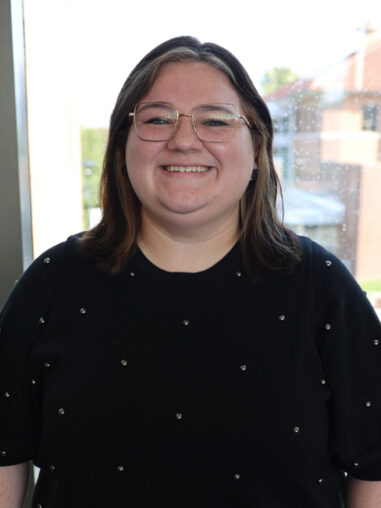
DISABILITY COORDINATOR